Server-Side Tracking in 2026: Rebuilding Measurement After Cookies

Server-side tracking is not a way to bring cookies back. It is a way to control which data leaves your system, in what shape, and with what consent attached.
For a decade, analytics was mostly a script tag problem. A marketing team added a snippet, the snippet set a cookie, and the reporting tool reconstructed a journey from page views. Browser privacy changes, consent requirements and ad blockers did not kill that model overnight, but they made its numbers increasingly hard to defend.
Server-side tracking is the common response. It moves tag execution from the browser into a server you control, which can improve performance, reduce data leakage and make consent enforcement more reliable. It does not restore the old cookie-based view of the world, and teams that expect it to will be disappointed.
Why client-side tracking broke
Three shifts matter:
- Storage is shorter and more restricted. Safari and Firefox cap or partition client-side storage, and Chrome's third-party cookie changes have made cross-site identity unreliable.
- Consent must be explicit. In many jurisdictions, analytics and advertising tags cannot fire before a user makes a choice. A tag manager that loads everything on page load is a compliance problem.
- Blocking is mainstream. Content blockers and built-in tracking protection remove a meaningful share of client-side requests, and the loss is not evenly distributed across audiences.
The result is not zero data. It is biased data: some segments are undercounted, some events are duplicated, and the gap changes whenever a browser ships an update.

What server-side actually changes
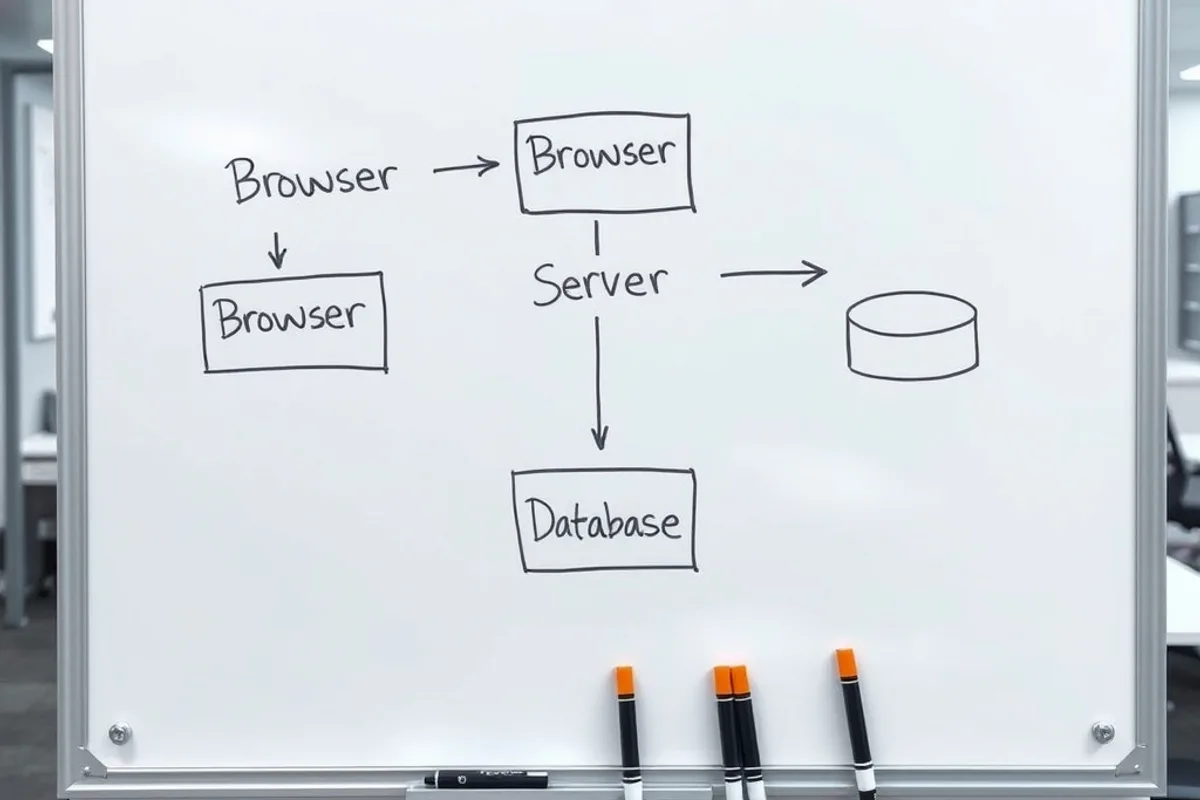
In a server-side setup, the browser sends events to an endpoint you own — often a small collector running next to your application. That collector validates, enriches and forwards events to your analytics vendor or warehouse. The browser no longer needs to know which vendors exist.
This buys four real advantages:
- Fewer third-party requests in the critical path, which improves page performance and reduces the chance that a vendor outage breaks the page.
- Data minimisation. You can strip IP addresses, truncate user agents and hash identifiers before anything leaves your infrastructure.
- Consent enforcement in one place. If consent is absent, the collector drops the event instead of trusting every tag to check a banner.
- Schema control. Events can be validated against a contract, so a renamed button does not silently break a funnel.
What it does not do is create identity across sites. If a user clears storage or uses a different device, server-side tracking cannot reliably stitch the sessions together without a login or another first-party signal. That is a feature of the privacy model, not a bug to engineer around.
The consent boundary
The most important design decision is where consent is evaluated. Put it at the collector, and make the default deny. A practical flow looks like this:
- The browser sends an event with a consent state and a purpose (analytics or marketing).
- The collector checks the consent record against a policy table.
- If consent is missing, the event is dropped or stored in an aggregate-only form with no identifier.
- If consent is granted, the collector forwards the allowed fields and logs the decision.
Keep the consent record server-side, keyed to a first-party identifier, so a later withdrawal can suppress future events. This is more work than a client-side flag, but it is auditable. An auditor can ask which data left the system and why; a log answers that question.
A minimal stack that works
You do not need a large customer data platform to start. A small team can build a defensible stack with four components:
- A typed event schema. Define events, properties and allowed values in version control. Treat it like an API.
- A collector. A small service that validates, applies consent and writes to a queue or directly to storage.
- A warehouse table. Raw events, append-only, with a retention policy. Do not transform on ingest; keep the raw record.
- A semantic layer or set of SQL models. One definition per metric, reviewed like code.
For reporting, start with SQL and a lightweight BI tool. A warehouse-native approach keeps the numbers reproducible and makes it easy to answer questions the original dashboard did not anticipate.

Measuring success without inflating it
After migration, headline conversions often change. Some of that is improved capture, and some is double counting or bot traffic. Validate before celebrating:
- Compare server-side events with order or signup records from the source system.
- Run a bot-filtering rule and document it.
- Keep a small, consenting control group on the old client-side path for a limited period and compare trends, not absolute totals.
- Track data quality metrics: missing properties, invalid enum values, duplicate event IDs.
Define success as a smaller gap between reported and actual business events, not a larger number in the dashboard. A tracking system that reports 10% fewer conversions but reconciles with finance is more valuable than one that reports 20% more with no explanation.

The bottom line
Server-side tracking is a governance tool first and a performance tool second. It gives a team control over the data boundary, which is exactly what modern privacy expectations require. Start with a schema, a collector and a warehouse table; add vendors later if they still earn their place.