Rural Connectivity That Works: Starlink, LTE and WISP Compared

Rural internet is not one problem. Satellite, LTE and a local wireless ISP solve different constraints, and the best setup often combines two of them.
Rural connectivity advice often collapses into a single recommendation: get satellite. That is sometimes right, but it is not a universal answer. A local wireless ISP with a clear line of sight can outperform satellite on latency and cost. An LTE router on a good tower can be excellent for a household that does not need much upload. The right choice depends on what is actually available at the address.
This guide compares the three realistic options in 2026 and suggests how to combine them for reliability, because rural households often need a backup more than they need a headline speed.
Three options, three trade-offs
- Low-earth-orbit satellite: wide availability, moderate latency, higher equipment cost and weather sensitivity.
- LTE or 5G fixed wireless: cheap equipment, good latency near a tower, highly dependent on signal and congestion.
- Local wireless ISP (WISP): a point-to-point or point-to-multipoint radio link to a local provider. Quality varies enormously by operator.
There is also fiber, which is the best option where it reaches. If a rural fiber scheme is planned for your area, check the timeline before signing a long contract.
Satellite realities
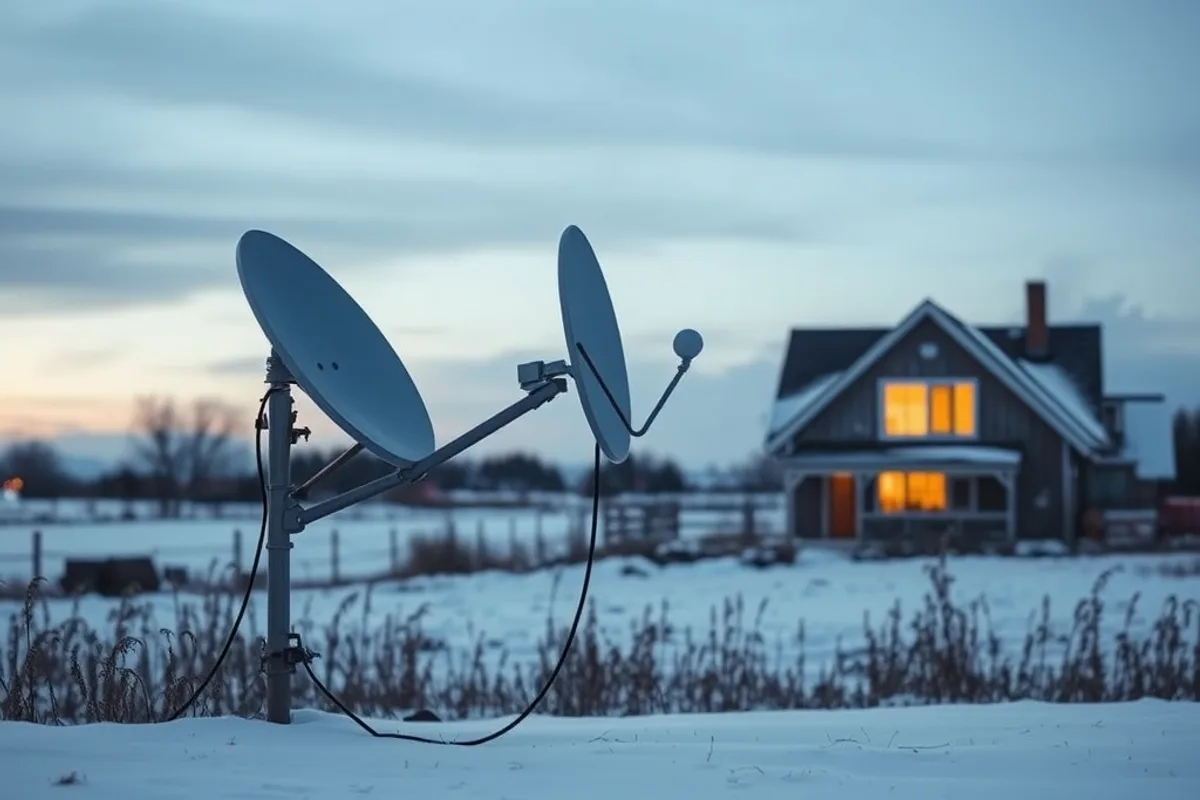
Modern low-earth-orbit satellite internet is genuinely usable for video calls, streaming and general browsing. Latency is typically in the 25–60 ms range, which is workable for most applications but not ideal for competitive gaming.
What to expect:
- Throughput varies by plan and time of day. Peak-hour deprioritisation is common.
- Upload is limited. Check the upload figure before relying on cloud backups or live streaming.
- Weather can interrupt service. Heavy rain or snow on the dish may reduce throughput.
- Power draw is meaningful. The terminal and router can draw 50–75 W, which matters on a solar or battery setup.
- Equipment is proprietary. You rent or buy a terminal tied to the provider.
LTE and WISP
An LTE router with an external antenna can be the cheapest workable option if the signal is strong. Test with a borrowed router or a phone in the exact location before committing. Signal bars are not a reliable predictor; measure download, upload and latency at peak hour.
A WISP is a local business that installs a radio on your roof and connects it to a tower with backhaul. The experience ranges from excellent to frustrating, so ask neighbours and check reviews. Good questions:
- What is the committed speed at peak hour, not the maximum?
- Is there a data cap or fair-use policy?
- What is the repair time after a storm?
- Does the contract include equipment, and who owns it?
- Can I get a trial period?
WISPs often have lower latency than satellite and better upload than LTE, which makes them a strong choice for remote work when the operator is competent.
Cost and power
Compare over three years, including equipment and installation. Satellite usually has the highest upfront cost and the highest monthly fee, but it is available almost everywhere. LTE can be inexpensive but may have data caps that make heavy use expensive. A WISP sits in between, with quality as the wild card.
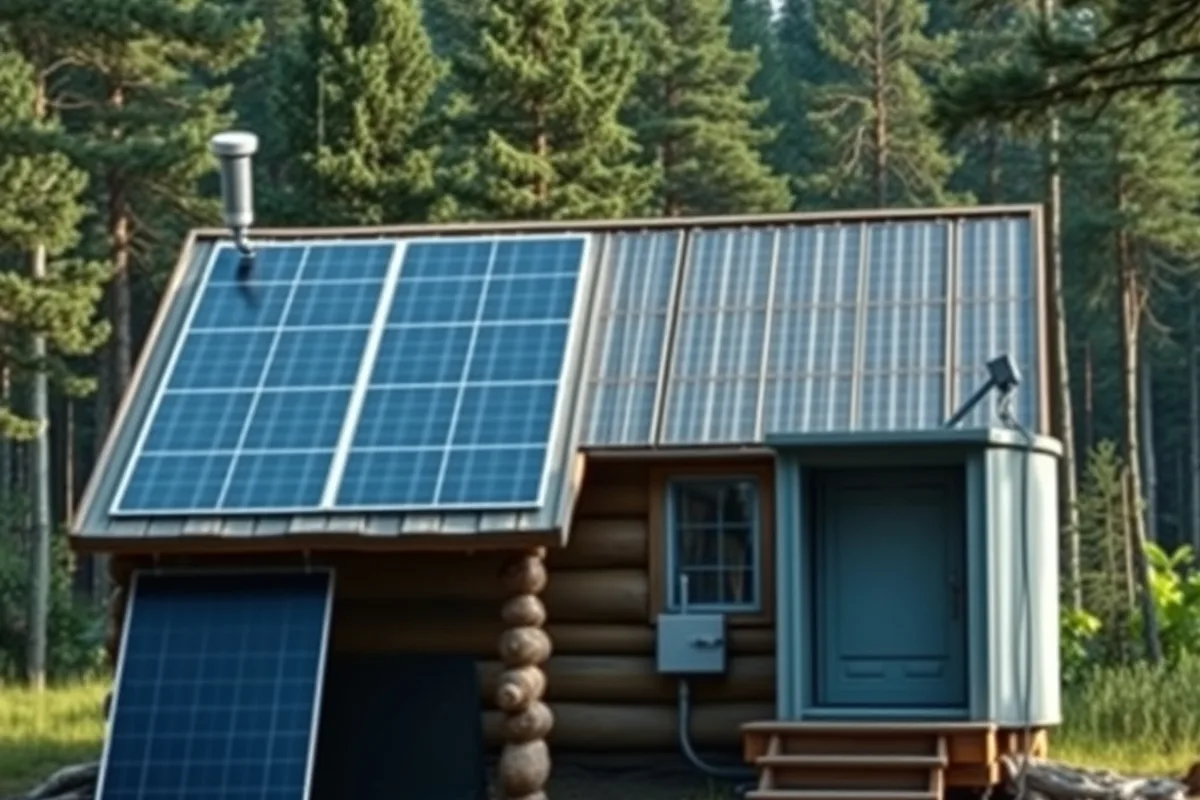
For off-grid or solar-powered homes, add power draw to the calculation. A satellite terminal that runs 24/7 can consume more energy than a small fridge over a month. An LTE router or a low-power WISP radio may be a better fit.
A resilient setup
For a household that depends on connectivity for income, one line is a single point of failure. A practical setup combines:
- A primary connection chosen on measured performance, not advertising.
- A backup path — often an LTE router with a prepaid SIM, or a second WISP link if available.
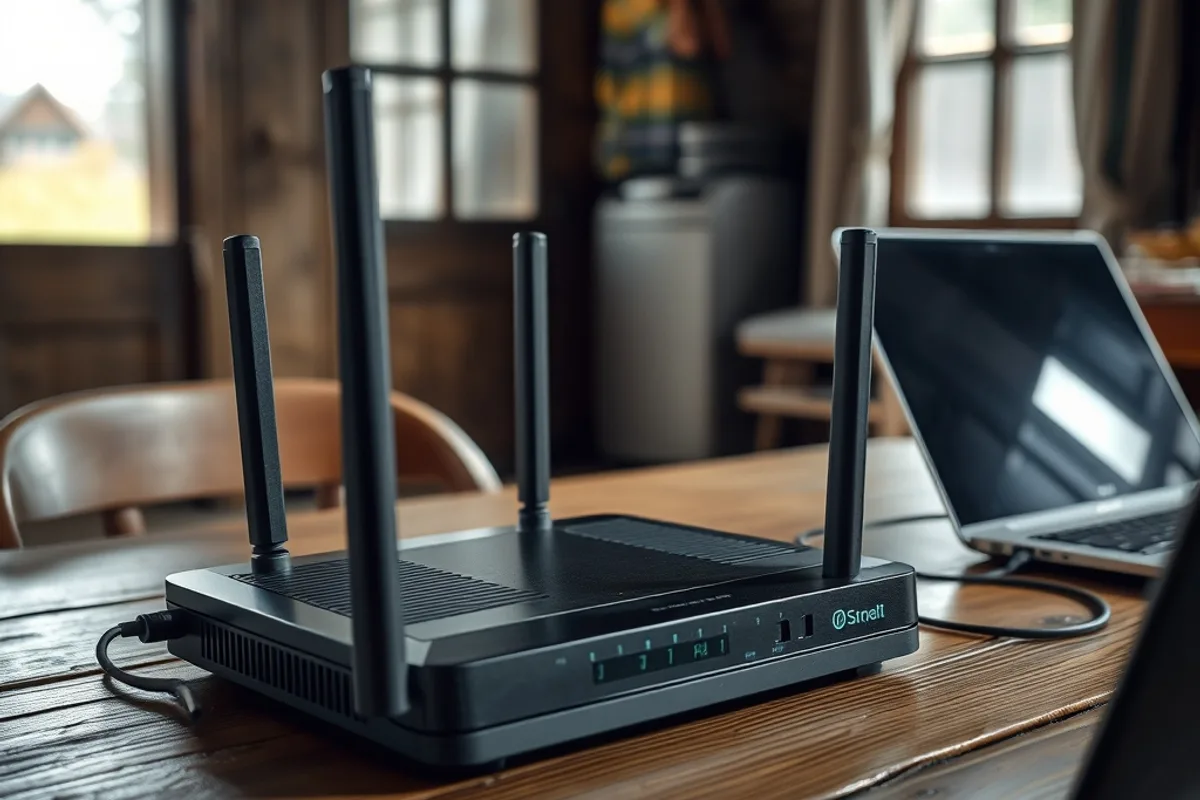
- A router that supports failover, so the switch is automatic rather than manual.
- A battery backup for the router and terminal, sized for at least four hours.
- Monitoring that logs outages, so you can hold a provider to its repair commitments.
Keep the backup cheap and boring. Its job is to keep email and voice calls working during an outage, not to deliver 4K video.

The bottom line
Rural connectivity is a local decision. Measure the options at your address at peak hour, read the contract, and budget for a backup if the connection matters to your income. Satellite, LTE and WISP each solve a different constraint; the best setup is usually the one that acknowledges those constraints instead of pretending they do not exist.