Fiber vs Fixed Wireless in 2026: A Decision Framework for Households

Download speed is the least interesting number in a connection advert. Upload, latency and congestion at peak hours decide whether the line works for real life.
Broadband advertising has trained households to compare download speeds. That number is easy to market and increasingly irrelevant. A 500 Mbps line with 20 Mbps upload and unstable latency is a worse remote-work connection than a 200 Mbps line with symmetrical upload and a clean route to the office.
Fiber and fixed wireless are the two realistic choices in most markets in 2026. They are not interchangeable, and the right answer depends on how the household uses the connection rather than on which technology is newer.
The numbers that matter
Judge a connection on five dimensions:
- Upload speed: video calls, cloud backups, large file transfers and live streaming.
- Latency and jitter: gaming, VoIP and interactive work. Stability matters more than the average.
- Peak-hour performance: what happens at 8–10 p.m. when the neighbourhood is online.
- Reliability: outage frequency, repair time and whether there is a backup path.
- Contract flexibility: installation fees, price locks and exit terms.
Run a speed test at peak hour, not at 10 a.m. Ask the provider for typical evening latency, not the best-case figure.
Where fiber wins
Fiber is a dedicated physical path to the premises. That gives it three structural advantages:
- Symmetrical or near-symmetrical upload. A 500/500 plan is common, which matters for backups, remote work and content creation.
- Low, stable latency. Light in glass is predictable, and a well-built network has less contention than a shared wireless cell.
- Headroom. Upgrading a fiber plan is often a configuration change, not a new installation.
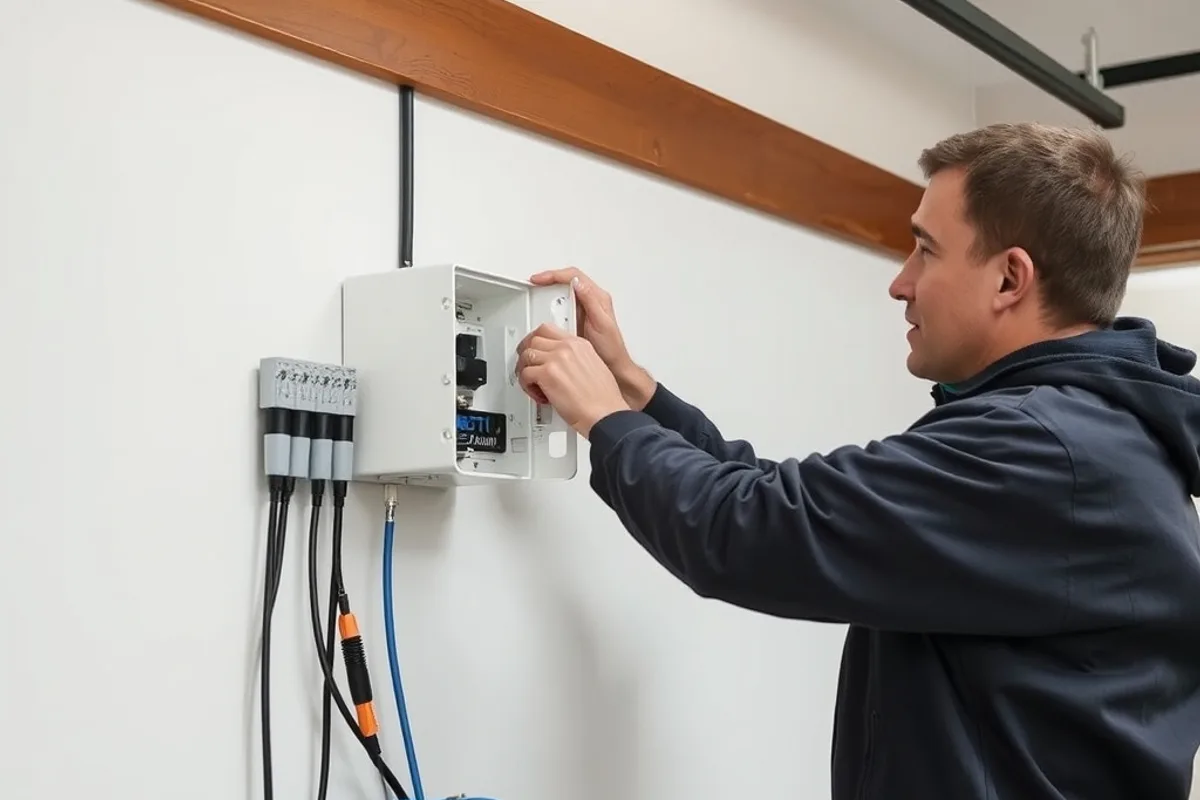
The trade-offs are installation time and availability. Fiber may take weeks to activate, and some buildings or rural areas are not connected. If fiber is available and the installation cost is reasonable, it is usually the safest long-term choice.
Where fixed wireless wins
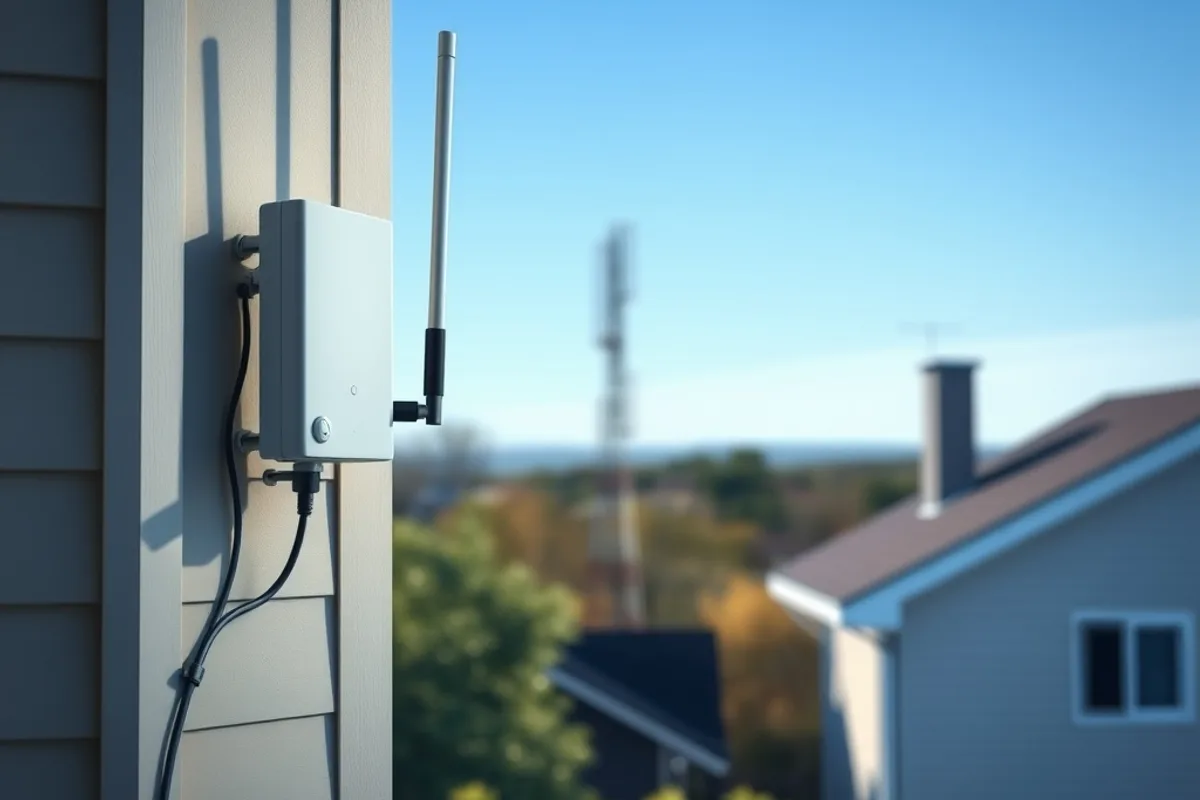
Fixed wireless uses a radio link to a nearby tower or access point. It can be installed in days, often without drilling, and it reaches locations where fiber is unlikely to arrive soon. Modern systems can deliver several hundred Mbps with latency in the 15–40 ms range under good conditions.
The variability is the catch. Rain, foliage, tower congestion and line-of-sight obstructions all affect performance. A fixed wireless connection can be excellent at 2 p.m. and mediocre at 9 p.m. if the tower is oversubscribed.
- Best for: renters, temporary housing, rural premises and households that need a fast install.
- Watch for: data caps, speed tiers that depend on signal quality, and contracts that do not guarantee evening performance.
Total cost comparison
Compare three years, not one month. Include:
- Monthly plan price, including any router rental.
- Installation and activation fees.
- Equipment you must buy, such as a mesh system or a mounting kit.
- Early termination fees and price increases after a promotional period.
- The cost of a backup connection if reliability is critical.
A cheaper fixed wireless plan with a 24-month contract and a mid-term price rise can cost more than a slightly more expensive fiber plan with no lock-in. Always calculate the exit cost.
A household decision tree
Use this sequence:
- Is fiber available at the address? If yes, get a quote. It is usually the default unless installation is prohibitively expensive.
- Do you upload more than 50 GB a month or work on video calls daily? Prioritise upload speed and stability. Fiber wins.
- Is installation time critical? Choose fixed wireless if fiber would take more than a few weeks.
- Is the fixed wireless tower lightly loaded? Ask for evening performance data or a trial period. If the provider will not share it, assume congestion.
- Do you need a backup? Keep a mobile hotspot or a second line if your income depends on the connection.

The bottom line
Fiber is the better long-term default where it exists: more upload, lower latency and more upgrade headroom. Fixed wireless is a strong alternative where fiber is unavailable or slow to install, provided the tower is not oversubscribed. Decide with evening measurements and a three-year cost, not the download number on the advert.